

The Small Details That Make an Interior Render Feel Real
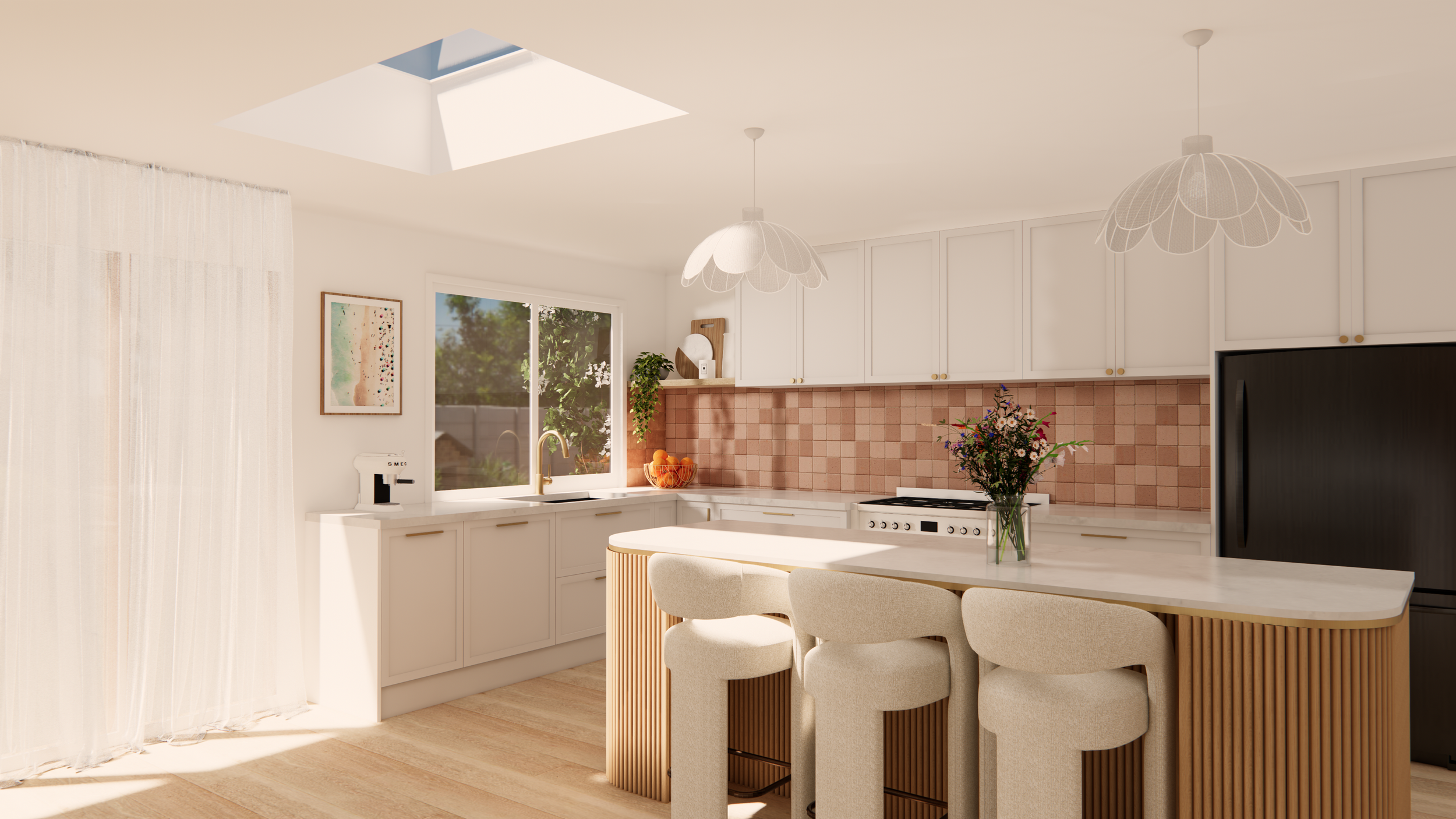
Lighting That Feels Natural
Lighting is one of the first things people notice—even if they don't realise it.
Natural daylight should behave realistically, artificial lighting should feel intentional, and shadows should have enough depth to create atmosphere without making the space feel dark.
Great lighting helps clients understand not just how a room will look, but how it will feel.
Modelling the Products That Matter
Often the perfect pendant light, tap or furniture piece doesn't exist in the 3D warehouse.
That's where custom modelling comes in.
Rather than substituting a generic object, we'll often recreate from scratch to better represent the intended design. It takes more time, but it allows the final visualisation to accurately reflect the designer's vision.
Those small details are often what clients remember most.
Scale
A render can feel unrealistic is when proportions are slightly off.
Furniture, lighting, artwork and décor all need to feel balanced within the space. Even subtle adjustments to the height of a pendant or the size of a coffee table can completely change how a room is perceived.
Materials Need Character
Stone isn't perfectly uniform.
Timber has grain.
Linen has texture.
Real materials have subtle imperfections that create warmth and depth. Carefully selecting and refining material finishes helps transform a flat image into one that feels believable.
It's often these understated details that make people stop scrolling and look twice. It requires detailed tweaks to get this right.
Styling With Purpose
Styling isn't about filling empty shelves.
Every object should help tell the story of the space.
Books, ceramics, greenery and artwork all add personality, but they should never distract from the design itself.
The best styling supports the architecture—it doesn't compete with it.
The Details Most People Never Notice
Some of the biggest improvements come from elements that rarely get mentioned:
Shadow lines
Window reveals
Skirting profiles
Cornice
Cabinet door thickness
Grout lines
Soft reflections
Consistent lighting temperatures
Realistic glazing
Hardware placement
Matte & gloss textures
Individually they're subtle.
Together they make all the difference.
Great Renders Build Confidence
Photorealistic visualisation isn't about creating the perfect image.
It's about helping clients understand a design before construction begins.
When the details are right, clients can make decisions with confidence, designers can communicate their vision more clearly, and builders have a better understanding of the finished outcome.
That's the real value of a great render.
At Studio Alyza, we partner with interior designers, builders and industry professionals to create SketchUp models and photorealistic visualisations that bring design concepts to life.
Whether you need support refining a single space or ongoing assistance across multiple projects, we'd love to become an extension of your team.
Let's create something your clients can truly visualise.
